Wednesday, April 27, 2016

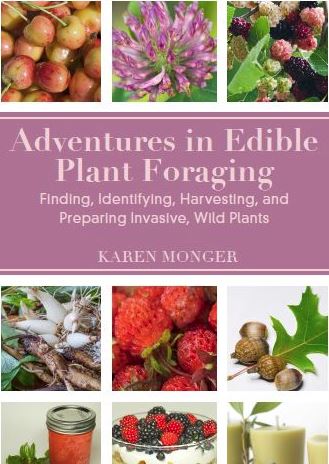
Adventures in Edible Plant Foraging: Finding, Identifying, Harvesting, and Preparing Native and Invasive Wild Plants


Many exciting things happening this spring! Our book has been published, and is available on Amazon or at one of the many appearances, classes, or walks we have scheduled for the upcoming months. We live in southeastern Connecticut, but most of the plants in the book grow across the temperate United States, and we tried to focus on the 50 safest, best tasting (no boiling in 3 changes of water here!) wild plants. The book also includes 20 of our own original recipes, and lots of color photographs, along with a bit of background story about our family's adventures while foraging over the past 10 years.

http://www.amazon.com/Adventures-Edible-Plant-Foraging-Identifying/dp/1634504070/ref=sr_1_1?ie=UTF8&qid=1453818753&sr=8-1&keywords=9781634504072


One of the newest books to which that we contributed is Vin Sparano's newest edition of Complete Guide to Camping and Wilderness Survival, where we contributed the section on edible plants and fungi. 

http://www.amazon.com/Complete-Guide-Camping-Wilderness-Survival/dp/0789331195/ref=sr_1_1?s=books&ie=UTF8&qid=1461791819&sr=1-1&keywords=vin+sparano

These two, newly published works join the other publications to which we have contributed either photos, text, or recipes. The March/April issue of Yankee Magazine features us foraging together as a family in it's First Light section. Robert has even had some of his photos of the glowing jack-o-lantern mushroom published in a science journal in his home country of Hungary.


Saturday, April 2, 2016

Mugwort Recipe - Mugwort Mochi


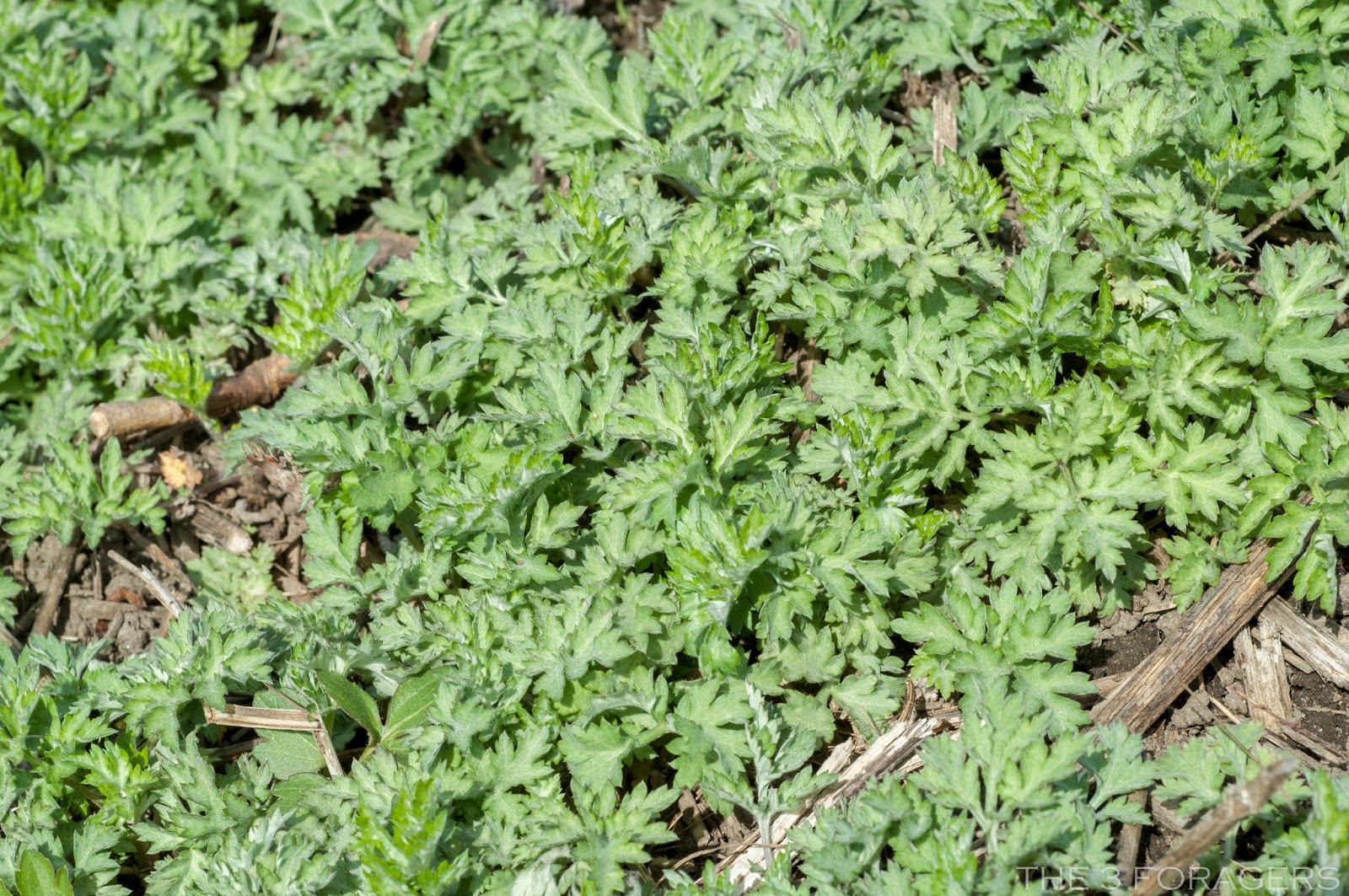
Mugwort (Artemesia vulgaris) is just popping up here in southern Connecticut, covering the ground in a mat of silvery foliage before it grows larger and puts up flower stalks. It is considered mildly invasive, originally from temperate Europe, Asia, northern Africa, and Alaska. Mugwort is a bitter herbaceous perennial plant growing from woody roots, and traditionally had been used to flavor drinks and beer. The Chinese, Japanese, and Koreans use different species of mugworts as flavorings,  often preferring a bitter component in their traditional foods.


Our local mugwort is not very bitter at this young stage, and here it is used to make a liquid that is added to make mochi, a Japanese cake made from sweet rice flour and sometimes filled with a paste. Gillian loves gooey food, so mochi are among her favorite treats, as the texture is soft and gummy.


Mugwort Mochi  makes about 15-20

INGREDIENTS (US):
1 oz. weight  young mugwort leaves
1 c.  water
1/2 c.  sugar
pinch of salt
1 c.  sweet rice flour (Koda Farms, Mochiko)
potato starch for dusting

INGREDIENTS (International):
25 g young mugwort leaves
350 ml water
107 g sugar
pinch of salt
165 g sweet rice flour (Koda Farms, Mochiko)
potato starch for dusting

filling of sweet red bean paste or sweet chestnut puree

1. Boil the water with the sugar and pinch of salt, add the mugwort leaves and remove from the heat.
2. Blend the water/mugwort mixture until most pieces are chopped up. Strain through a coffee filter to remove the fibers.
3. Mix the green liquid into the rice flour, making a slightly pourable dough.
4. Pour the dough into a glass or metal bowl and steam it covered in a pot for 30 minutes, resulting in a gooey but firm dough.
5. Let the dough cool slightly, then dump it out onto a surface that has been heavily dusted with potato starch. You need to work with the dough while it is still warm, and it will be incredibly sticky.
6. Roll the dough about 1/4 inch (1 cm) thick, and cut into 2 inch (4 cm) squares with a pizza wheel of knife. You can let the squares cool and eat the mochi as is, or while the squares are still warm, roll the soft dough around a chilled ball of sweet red bean paste (1 tsp or 5 ml) and pinch the ends to close. Serve the mochi at room temperature and they will stay gooey.


Monday, March 7, 2016

Maple Tapping and Candy Making


Warming days and freezing nights mean it's time to tap some maple trees for
sap! We only tap 2-3 trees, since we generally don't boil our sap to syrup, we just drink it as sap. There are trace minerals and sugars in fresh sap, and it can be very refreshing straight from the tree. We don't have any facilities to boil our sap into syrup, which causes a lot of steam and consequently makes a lot of condensation in our tiny kitchen. The most we have done in the past beyond drinking raw sap is reducing the sap slightly with some ground chaga to make a naturally sweetened decoction.


Robert decided to try making some chaga-infused candy with a small amount of sap, only about 4 gallons total, resulting in a few products: an accidental chaga-maple caramel, a chaga-maple hard candy, and chaga-maple candy. The caramel came about because he didn't boil it and reduce it long enough, only to about 240º F. While still warm, it is a gooey, sweet, and dark caramel sauce, good for ice cream or even by the spoonful if I need something sweet. When it cools to room temperature, the sauce thicken up a lot, so I can heat it to make it pour-able again.


For the hard candy, he boiled the decoction longer, until it reached soft crack stage, about 258º F-260º F. Then he poured some of the extremely hot sugar into some candy molds and let it cool, before we wrapped the chaga-maple candies in waxed paper for storage.


For the chaga-maple candy, he took a wooden spoon and whipped up the remaining hot sugar until it became creamy, and poured into a greased glass pan. Once it cooled, he chopped it up into pieces that melt slowly in your mouth.


Tuesday, January 5, 2016

Yule Log 2015


This year's Yule Log cake admittedly came a few weeks after the Yule. We brought it to share at some friend's post-New Year Winter Open House party, since the three of us can't possibly eat the whole cake ourselves. The cake is a vanilla biscuit roulade, filled with a black cherry (Prunus serotina) mousse, frosted with chocolate buttercream, and decorated with chocolate and cocoa nib "bark". You often read in identification manuals that the outer bark of the black cherry tree looks like burnt cornflakes or chips, so I tried to figure out how to represent that in chocolate. I used the same black cherry puree that I had made for ice cream and jam, having a few small containers left in the freezer.


The meringue mushrooms are always fun to make too, with just some egg whites and sugar, and decorated with melted chocolate and candy melts. This year I made some oysters (Pleurotus ostreatus), Amanita muscaria with white gills and red tops, meadow mushrooms (Agaricus campestris) with dark chocolate gills, and one red-capped Russula with a white stem and white gills.

Black cherries in the summertime

Monday, January 4, 2016

Oysters in Winter

Fresh oysters and wood ear fungi

Paprika and garlic rubbed oysters
New England had been having an unusually warm autumn, as well as a late start to the winter weather. The warmth let us hike and hunt mushrooms up until Christmas day, with the polypores making a great showing, along with many, many logs covered with edible oyster mushrooms (Pleurotus ostreatus). Oysters found this late in the season are great because they tend to be bug-free and can be found in great quantities. Wood ear fungi (Auricularia auricula) were also found and brought home to dehydrate for soups.


Pan fried oysters over a bittercress salad and polenta


Dandelion root
There were even lots of greens we collected into the end of December, most were bi-ennials starting to grow and some were plants that had seeded themselves then started to sprout. Leaves of garlic mustard (Alliaria petiolata) were growing from the first season's basal rosette, and large enough to use as a wrap! Yard onions (Allium vineale) leaves came back up and can still be plucked even as the ground starts to freeze. Rosettes of hairy bittercress (Cardamine hirsuta) popped up, and there were even tiny, white blossoms on some of them. Dandelion greens (Taraxacum officinale) that are picked now tend to be on the mild side, and roots can still be dug and roasted for a coffee substitute.


Fresh dandelion greens

Garlic mustard leaves and some bittercress


Friday, November 13, 2015

Hen of the Woods for Dinner


2015 has been a fantastic year for our favorite edible fungi, hen of the woods, maitake, or Grifola frondosa. Last year we were not able to find more than two, both from a very reliable spot. This year we brought home more than 35, I stopped counting after awhile. We used our jerky recipe on most of the very large fronds and cores, doing a little tweaking to the ingredients and measurements, and vacuum packing lots of delicious jerky to snack on all winter long.

Wild Rice and Maitake Soup

With all of the little fronds, extra bits, and smaller, more compact hens, we made nearly a month's worth of dinner. "Hen"chiladas, creamy hen soup, brothy hen soup with wild rice, a loaf made with buckwheat, hen stroganoff, hen and potato gratin, miso and soy glazed and roasted hens with root vegetables, sausages, and hen and sweet potato hash all made appearances at our table for the month of October and through the beginning of November. We didn't make formal recipes for all of our photographed meals, we just wanted to eat dinner! Most of the cooking we do is on the fly, tasting as we go. Robert and I both have previous experience in commercial kitchens and can cook without written recipes.

Buckwheat and Hen Loaf with Hen Gravy

Lots of the small bits also made it into our freezer and into the dehydrator. We now have 3 gallons of dried hen fronds to re-hydrate and make into a umami-filled broth and as a base for gravy. Preserving our bountiful harvests has been very important for us to alleviate the mushroom hunting withdrawal symptoms we feel during the cold New England winters.

Hashbrown Casserole with Pickled Ramps and Hen Sausages

One trip, 9 hens

Monday, November 9, 2015

Coming in Early Spring 2016 . . .


We are very excited to announce the early spring release of our book with Skyhorse Publishing,

Adventures in Edible Plant Foraging

Finding, Identifying, Harvesting, and Preparing Native and Invasive Wild Plants
 
 
We are hoping to partner with  nature centers. libraries, garden clubs, and any interested organizations who would like to help us promote the book through signings, slide shows or lectures, or tastings of wild food throughout the seasons. 

Please feel free to contact us at kraczewski@comcast.net or through our Facebook page, https://www.facebook.com/The-3-Foragers-118852208201771/?ref=bookmarks.

http://www.skyhorsepublishing.com/book/?GCOI=60239108626260&